Monday, 23 March 2015

23.03.15

In our acting for camera lesson today we filmed the first scene in the painting and decorating rooms which are no longer used. We all worked together and were given film crew roles. We took about 6-7 shots of the scene in different shots, we  took wide shots, close ups and long shots. I was given the job role of "Continuity" which meant that I had a copy of the script to make sure they were getting their lines right and that everything stayed the same, their acting had to remain the same and their gestures and their marks, due to the fact that we cut the scenes at points, and then would use another take to make the scene, so if their acting and gestures/positions were not the same every time, the scene put together would not look naturalistic and this would show to an audience that it has been cut at various points.
I helped them out with lines, the lines were on the whole pretty good, but their were words here and there that were missed out, or changed but I helped them and prompted them when asked to.

Watching the scene being filmed today has helped me prepare for mine and Sav's scene to be filmed, as I have noticed that in order to act for camera you need to be so relaxed, as if you are tense it shows so much on the camera, and to also not make noises whilst I am speaking, the boys were sniffing a lot during the scene and it is so noticeable as the boom was right above their heads, so I need to make sure I do not sniff or cough, or mumble as it shows up even more than it does when acting on the stage!
I learned that to play my character, Lisa, I need to be so relaxed, as Lisa is very on edge, traumatic and un hinged,so in order to play a crazy and tense character, I need to be so relaxed within my body and mind to portray this in the best way. This is a Yoshi Oida technique, to always be relaxed within my body as an actor, especially when playing a very tense edgy character


20.03.15

In today's lesson we began to read through the play, Arturo Ui.
We read up to scene 6 as a group, and I began to develop an understanding of the play and of the characters. I learned that Dogsborough, is a very old man in his 80's and has been involved with the gangsters of Chicago and that Arturo Ui feels he should be in power and wants to make a difference to the Cauliflower business, he is passionate about what he wants to do and has VERY long monologue speeches in the play, he is very alike Hitler, who similarly had long speeches about how he wants to change society and what he wants people to do.
Dogsborough does not like Arturo, and feels very threatened by him, and I feel as he is an old man he is being bullied into things he does not want to do.
I feel in ways this play is a dark satire of Hitlers rise to power and Arturo portrays Hitler, in a comedic, dark way. 

Also In todays lesson, we had a discussion about Hitler, as the play is based on the Rise of Hilter, as it was written the same time as Hitlers rise and reign. We got onto the topic of how powerful and passionate Hitler was during his speeches, he embraced his "audience" and he was a very good public speaker, he has such a presence during his speeches and he is very intimidating, you can tell he truly believes what he is saying and he was determined to make a change. In ways I feel Hitler was misunderstood, as I do believe he imposed the things he did for the welfare of his country,BUT he did take things much too far with the Jews, and the murders of thousands of innocent people just because of their beliefs or the way they looked,that was absolutely awful, but as a dictator and a public speaker, Hitler was motivational, powerful and passionate about what he was saying. 
Other famous dictators who have delivered powerful speeches are;


Here are three videos I have watched for research into Hitler and why Arturo Ui is based on him, these speeches are chilling and so powerful, I felt uncomfortable watching these as the power he has within his words and his body language just over take everything else, and I imagine being in the same room as him would have been terrifying yet empowering for those who followed and believed in him. Watching these videos and researching more into Hitler has helped me understand why Brecht focused this play on the life of Hitler and I have discovered a lot about Hitler that I did not know.
Hitler's speech

Hitler talking about Jews

Adolf Hitler & Nazi's


  • Larceny- Stealing, unlawful, illegal
  • Commodity Exchange- World trading

Thursday, 19 March 2015

16.03.15

In today's acting for film lesson, we explored and re capped on Naturalism and the steps needed to create a naturalistic scene for camera. We as a group brain stormed together, the main methods for creating a naturalistic scene is to research the characters and apply given circumstances,and what would I do if I were this character? (The what if technique)
In order to create a Naturalistic scene and character, it is crucial to apply these methods as this allows an actor to feel closer to the character and begin to understand them at a deeper level. As an actor you also have to consider the character objectives, and the super objective of a scene. The characters objectives HAVE to link with the super objective of the scene/play.So if the super objective of the scene is a character being revealed as a psychopath, but the actor feels the character has deep rooted issues, which in real life this would definitely be the case, but if this does not go with the themes of the play, the actor may be asked to revise their interpretation of the character. So before making any character decisions I always READ the play and find out the super objectives and also the relationships between the characters. For example, if other characters hated my character for numerous reasons, I would think twice about making my character a really lovely genuine person, because realistically she probably is not! So the super objective ALWAYS comes before character objectives.
 I feel these are the main steps needed in order to create a naturalistic scene, as the blocking, costume ect all come AFTER you have researched your character, made decisions, applied given circumstances and decided on objectives.
And learning lines, are NOT a form of rehearsals....this should be done in spare time and not in rehearsals, obviously you need to know your lines in order to rehearse, but line learning should be seen as something you do before you go to bed, or when you wake up or after your rehearsal classes, during class you should be making decisions with other actors in the scene, improvising and beginning to block. 
Also I feel research should be done in spare time, so you can come to classes with ideas and knowledge in your head.

After this we got into our pairs and began rehearsing our chosen scenes, Sav and I have chosen Girl Interrupted, starring Angelina Jolie and Winona Ryder, two amazing actresses, and a very dark and chilling scene between two women in a mental institute. My character, Lisa, is very derranged and is a sociopath. She intimidates and bullies the other girls and is like a school child around them, playing everyone off against each other and making their lives hell. As a character she is very emotionally disturbed and I feel she did not have a nice upbringing and her parents probably had problems as well, she is not very stable, and seems as though she has never found a happy place in her life, she destroys relationships and pushes everyone away from her. She cannot accept help, and I feel sorry for her to a degree, but I feel she deliberately makes drama and enjoys seeing others in pain.
She is a disturbing character, especially after watching the film, and in a scene she does not even flinch at the sight of a former patient hanging herself in her bathroom, which is partly LIsa's fault. As she tormented her in her own house, after Lisa and Suzanne(ryder) escape the mental hospital. Lisa bullies Daisy, and makes comments about how Daisy has sexual relations with her biological father and how he is a paedophile, she is nasty about Daisy's progress in the hospital and how she was not released because she had gotten better, it was because the nurses "gave up" on her. She keeps on at her, and the next morning Suzanne finds her hanging in her bathroom, and Lisa simply says "Oh, what an idiot" and takes money from her hanging bodies bathrobe! I found this so disturbing and unnerving to watch, how can someone be that cold? She has serious issues, because if that were me, I would of ran out the house screaming or I would of physically thrown up, to see a body hanging like that. But she is so indifferent, because she is numb inside, due to years of depression,self harm, drugs and "casual" sex.
I have been researching about socio paths, and they are on the eye, usually quite attractive and well presented. They like to look good, and to seduce other people. They are OBSESSED by money and it is their main motivation, they will do basically anything for money. This is definitely Lisa, as she steals money from Daisy and a man at a party, and then she runs away. I imagine she has probably spent most her life behaving like this, and never having any real friends, because people she has gotten close to in the past have probably been driven away from her because of her stealing, lying or her inability to show affection.

  I feel I have a good character interpretation of Lisa and I have researched a lot into her behaviour, and this shows in the way I act in this scene, I feel Lisa would use a lot of facial expressions, particularly with her eyes.I always stare right at Sav, who is playing Suzanne, in a cold and chilling way, Lisa's eyes are cold and empty, and I portray this in the scene. 
We have found a location for the scene,as it is set in the basement "boiler room" of the mental hospital, we want to re create this using a very dark, empty and large space. There is an abandoned canteen at the back of college which is perfect for this scene, as I have been inside it before and it has a great echo and a "cold" feeling to it, and I feel this space would be great for this scene and would look great on camera.

I cannot wait to film this scene, and I feel as we keep rehearsing our characters become stronger, Sav and I are filming this scene after the Easter holidays, so we have a couple of weeks to rehearse this, and will rehearse in the space on Monday. And will stay after lessons to keep rehearsing.
For makeup/hair/costume for LISA I feel she would wear minimal make up and look quite grungy. Angelina Jolie has blonde hair in this film, I think it is a wig, but I feel that Lisa having dark hair would match her character better, but the director of the film and Angelina obviously made that choice to have Lisa with a blonde hair style. She also looks like she never eats, as she is SO thin in this film, but Angelina Jolie is pretty naturally thin anyway, but she does look really ill at some points, and I feel this creates a naturalism for Lisa, as someone like that probably would be very thin in real life.

I will have my hair down, and wear minimal makeup on my face,and possibly have dark eyes,I will try it out and see which looks best on camera. Unfortunately I probably won't be able to smoke in this scene as it is shot inside the college, Lisa smokes ALL the time in the film, I think she smokes in every single scene, so smoking is part of Lisa's " look" but this won't be possible. 
I think I will wear plain clothes, maybe a chequered shirt with black leggings. I want to create an edgy grungy look for Lisa, as this is how I have interpreted her in my mind.
I feel this look is better than the one above,as I imagie Lisa with dark looks rather than blonde, and I have dark hair so I feel I can portray this look

Wednesday, 18 March 2015

Research 2 (To be continued)

Assessment Week Work
Date Set: Tuesday 10th March

UAL Level 3 Performing & Production Arts
Due in: Tuesday 17th March 1.30 pm
Print out and bring to lesson.
The Resistible Rise of Arturo Ui
Exploratory Research for Unit 11

Investigate at least two interpretations of Arturo Ui. Write a report about the company that put on the show & how they interpreted Brecht’s text. Which actors featured in these versions ? How did they portray their role? (1,000 words )
I have found it quite hard to investigate this online as not much comes up on google when I type in, but I have found a company who have produced a play of Arturo Ui. It is produced by the Chichester Festival Theatre at the Duchess Theatre which is in the West End. It has not be performed yet and is "coming soon" to London. 
(research link)Production of Arturo Ui


·         Watch at least two 1930’s films featuring Edward G Robinson or James Cagney. A good example is Scarface ( 1930’s version) or Public Enemy No 1. Write a film review. (500 words)

The first film I watched was the 1930's Scarface, and then I watched The Public enemy afterwards. Both films were interesting and very raw. 
Scarface 1932, featuring Paul Muni and Karen Morley, these actors were very famous at the time this film was made and it was produced by the famous aviator, Howard Hughes.
Scar face, is clearly a very old film and was in black and white. As I have seen many Violent action films, watching this film was an experience, as the themes and story lines in this film are about Gangster Al Capone and his gang, which was very serious in real life, but the acting was just so different back then as it is to now, or more so films are different. Nowadays, a film about Scar face would have special effects, an amazing soundtrack, lots of state of the art guns and cars, but this film purely relied on the actors. I did not find it very hard hitting, but it was interesting to watch. 
I liked how the gangsters are portrayed in a slightly humorous way, they are seen as childish and remorseless for their actions, and I definitely felt that gangsters were definitely put to shame in this film, as they were not portrayed as the big, strong and dangerous men they want to be seen as, but they were shown as immature morons, who take no responsibility for their actions, and they blame the public for the existence of gang crime.

This original film is a very good film, for its time it would of been shocking and raw, but at times I felt the pacing was not quite right. I feel the reactions of the characters were not very good, and serious situations were not believable at some points. For example, the part when Cesca, Tony Camonte's sister returns home late, and is seen kissing a boy in the hallway. Tony tells her off and says she is not to see him any more, Cesca weakly protests, and then Tony gives her a wad of cash and she happily accepts this and skips up the stairs to her room! I find this reaction very un natural,and Tony just seems to get away with everything and does as he pleases in this film, and the characters reactions did not always match the objectives of the film/scene.
This film is not naturalistic at all, and it more follows in the footsteps of Brecht and Epic Theatre.

I feel because I have seen the Al Pacino version of Scar face before I have watched this one, I am comparing the two, which I shouldn't do as the more recent Scar face was filmed 50 years after, when acting for film had changed style, and the soundtracks and effects had improved.
Another factor of this film which I found slightly disturbing, is about Tony and Cesca. I feel Tony's jealously of his sister and the way he feels about her seems to be slightly incestuous at some points, he acts as though they are married throughout the film and at one point I thought she was his wife, I had to rewind the film! Although, I do not think Paul Muni's character would have been aware of this, I just think his behaviour towards her is somewhat different from how brothers should act around their sisters. This characterisation was definitely a choice from Howard Hawkes and Howard Hughes, as they were both very versatile and risqué film producers/directors, and I feel they would of wanted the audience to question Tony's feelings for his sister, it adds an element of underlying perverseness to the film.


·         Write a short summary on a play that you have seen which has used Brechtian techniques or was in a Brechtian Style. You can refer to more than one play. (500 words)

A play I have seen and researched is Blood Brothers written by Willy  Russell in 1982. The play was originally written as a school play, but gained maximum exposure when it was portrayed to the public and became a massive hit, and led to a UK tour in 1984. Blood Brothers is essentially a musical, but the play does portray Brechtian techniques and styles throughout. This play is about two twins,Mickey and Eddie, who were separated at birth, and the play follows both their lives. As both twins were bought up in different areas, their social classes are complete opposite, one twin is a councillor, and the other is in prison. The main aspect that pulls the two together, is that they are both in love with the same girl,Linda. The story line to this play is fairly Naturalistic, but the scenarios and character relationships are Brechtian as it is not something that would happen in real life just by chance, and the acting is not Naturalistic at all. 
The main points of the play that I noticed which had a Brechtian style was the fact that in parts of the play, including right at the beginning, it is being narrated by an actor, which would remind the audience that this is not real, and the story is being told to them directly by a narrator. This does not allow the audience to become too involved with the storyline and characters, as there is a constant reminder it is a play due to the narration. I feel having the narrator open the play is very Brechtian, as the playwright clearly wants the audience to be aware from the beginning.
As I watched the stage performance on line, I noticed that the lighting was always very brightly lit, which is a typical Brechtian technique, to keep the audience awake and aware that they are in a theatre watching a production. 
Every time the narrator spoke, the lighting would dim, and become very eerie, as the narrator had an unnerving sense about him, he was quite creepy and his acting was very epic theatre, he was seen as the "villain" and appeared in the middle of scenes, standing right in front of the actors, then coming off stage and the scene would then resume. This is Brechtian as something like that would not happen in real life, the scenes would be fairly naturalistic, like the scenes between the mother and Mickey, and also between Mrs Lyon and the mother, and then suddenly the narrator would appear and completely change the dynamic of the scene, by causing it to not appear naturalistic any more.


I feel another element of this play which indicates Brechtian styles is the "selling the baby" story line. Although this does happen in reality, you read about it on-line or in magazines about women selling their babies for money and for a better life, but the emotions of this scenario were not portrayed in this play. The mother did not seem that upset after selling her baby, and the other woman Mrs Lyons, gladly paid the mother off and completely pushed her out of the picture, without a flicker of emotion for the mother. This is not naturalism, as the emotions from the characters were not foreseeable, especially in these scenes.
It is also very unlikely that her husband Mr Lyons did not notice she was pregnant, and didn't  even stop to think about how strange the set up was, and especially as the mother Mrs Johnstone would have had the twin boys at a hospital, she would have been expected to see a midwife and post natal nurse regularly after having the twins,so the idea that she could just give away one son is so unrealistic, even though this is set in the 80's, it still would have been hard to fool the authorities, and even more so now. 

I really enjoyed this play as it was humorous, unpredictable and interesting.The characters were very funny, especially the twins Eddie and Mickey. At one point, the actor was playing Mickey, who was supposed to be seven at the time, and the actor looked at least 18 and was about 6ft tall! This is another Brechtian style, as it was completely un believable that he was actually a seven year old! It was interesting to see a musical interpreting Brecht, as opposed to a play itself. It proves that Brechtian techniques work on other types of theatre, and not just serious political plays.


How has Brecht used music in his plays. Who has he collaborated with and what has influenced his musical style? Write about one play that has used music. (5oo words)


Saturday, 14 March 2015

Watching the performance of Arturo Ui

I have been watching the play on youtube, it is in 4 parts. I have ordered my copy of the play but as I wait for it to be delivered I have been watching the full play. I like that the play has comical elements to it and is not all SO serious, as the plays themes and objectives are quite dark and dangerous. The play explores gangsters and the rise of Arturo, who is shown as a visually comical character, as he is not scary to look at, but he has the dark traits of Hitler and becomes obsessed with power and controlling others. I feel Brecht has used this characterisation on purpose, as it adds humour and unpredictability from Arturo, but also I feel Brecht is being honest, as Arturo was not always a gangster, he is expressed as quite nerdy and not intimidating at the beginning, similar to Hitler, as he lived a bohemian lifestyle as a water colour painter, and then become involved with politics and formed the Nazi party. I am looking forward to reading the play so I can form my own interpretations of the play, the political meanings and the characters. I can tell already that I would like to perform this play in a more dark and disturbing way, and not make it too comical, as the historical events that are portrayed through this play were very serious and Hitler killed thousands of people, and this needs to be emphasised through the play. To me it has a deeper meaning if it is performed in a serious dramatic way, rather than a comical way. Comedy kind of takes the power away from performances like this in my opinion. 


Assessment Week Work
Date Set: Tuesday 10th March

UAL Level 3 Performing & Production Arts
Due in: Tuesday 17th March 1.30 pm
Print out and bring to lesson.
The Resistable Rise of Arturo Ui
Initial Research

As always, we are looking for Pointless Research!!
(research that no-one else has found)

Find out some biographical information about Bertholt Brecht – who was he, where and when did he live etc. What was the environment that caused him to have the ideas that he did?

Bertolt Brecht (1898-1956) was a famous German playwright and poet. He began his career writing political poetry and plays about social issues, he was seen as a troublemaker and was expelled from school for writing anti war poems at a very young age. 
He was influenced by Karl Marx'theories of socialism. His theories were about social justice and based on topics such as money and power, and status within society. He explored Industrialization and how this affected workers and the power and status of society, 
EPIC THEATRE came about when MELO DRAMA, REALISM AND NATURALISM were very popular art forms. Epic was created to make the audience question and think about what they were watching, this came around in the 1920s.
Brecht achieved epic theatre by keeping the audiences attention by using lighting effects, known as Alienation effects, which would direct the audiences attention to something new. This would constantly disrupt scenes to ensure the audience would not get lost in the emotions of the characters and story line. Brecht described this method as " being slapped in the face with a wet fish" It would wake the audience up and constantly remind them that they were watching a piece of theatre, and that the characters and story were not real life. He did not want the audience being absorbed into the characters, Brecht felt that an actors job was to merely show what happened. His theory is the complete opposite of STANISLAVSKI'S theory. Brecht rejected naturalism, and felt actors should not be seen as real people.
He felt there should be NO fourth wall, and always make sure the audience do not feel it is real. 
Brecht died at the age of 54, he suffered a heart attack. In the 1940's he left Nazi Germany and fled to Hollywood where he resided writing scripts. When he died he requested to be buried with a stiletto heel through his heart!
What is Epic Theatre? What are the aims of Epic Theatre and what are the techniques that Brecht suggests?
Epic theatre is a style of theatre which became popular in the 1920's. Brecht was one of a few practitioners who used and created this style of theatre, it came from the methods and practices of Brecht and various other practitioners. 
The main technique of epic theatre is "Alienation" to make the audience feel detached from the play and the actors. Epic theatre pushes the audience to realise it is NOT real and it is the opposite of Naturalism. Brecht did not want his audience to feel involved with the characters or the storylines, he wanted to make an impact on his audience and not to create relationships.
He would have the lights lit very brightly, have the actors play mulitple characters, so the audience did not feel it was real. He would also have the actors sit with the audience, in order to ensure the audience knew the actors were not real. This is similar to what we did in Twelfth Night, as most of us played more than 1 character and we all sat in front of the stage in the audiences view.
He believed in breaking the Fourth wall, between the actors and the audience and sometimes had the actors speak out openly to the audience.
Epic theatre requires the actors to play a character believably and well, but Brecht did not want to the characters to "become" the characters and to become too absorbed into the life of the character. He emphasised reality in all his plays, and they were all very political. 
Brecht did not agree with the heightened emotions in Melodrama, which Stanislavski used, Brecht did not agree with Stanislavski, as Epic and Naturalism are the complete opposites.
The main aim of epic theatre is to make sure the audience know they are watching a play and to not become lost in the characters and story lines.

When was the play written? What was happening at this time? Who was in power in Germany?  Find some biographical information about this ruler.

Adolf Hitler was born in  Austria in 1889. Hitler had a hard childhood and was neglected by his father. He wanted to pursue a career in Art, as he was a talented artist and painted watercolours to earn money. His father did not approve of his interest in art. Hitler also showed an interest in German nationalism, and rejected Austria's authority. When Hilter's father died in 1903, his mother let him drop out of school and move to Vienna, where he worked as a casual labourer and a watercolour painter. Hitler expressed a strong interest in Art and applied to the Academy of Fine Arts twice, and was rejected both times. He moved into a homeless shelter where he lived for several years, struggling to get by and continuing to sell his art work. Hitler applied to work in World War 1 serving for Germany and was accepted in 1914, even though he was Austrian. When the war ended in 1918, Hitler was distressed that Germany gave up so quickly, and I believe this is what led Hitler to strive to make a change and become Germany's dictator. After the war Hitler returned to Munich and worked as a German intelligence officer. Hitler regularly gave "Beer hall speeches" about how he wanted to change the German society and how he was against Jews, Marxists and Homosexuals.He gained many followers from this and in 1923 he announced to 3,000 people at a beer hall that the national revolution had begun. the "Beer Hall Putsch" riot included 20 deaths and was not successful. Putsch means a VIOLENT attempt to overthrow a government. This resulted in Hitler being arrested three days later and was sent to prison for a year, while he was in prison he began writing a book "Mein Kampf" (My struggle) in which he dictated all his ideas to become the German dictator and change German society into one race. In 1932, Hilter was out of prison and the German depression gave him a Political opportunity to come into power. In 1933 after success in Elections and gaining more power and followers, the Nazi party was confirmed the ONLY legal party in Germany. The Holocaust began in 1933, and from 1939 until 1945, Hitler believed interracial relationships made the poor hygiene increase, and he banned marriage between jewish germans and non jewish germans. Between 1939-45 Hitler and the Nazi party killed up to 14 million people, including 6 million jews, in concentration camps. He also sent 100,000 gay men to concentration camps as he was very anti gay, and he was also abstinent from meat, cigarettes and alcohol. After years of war, murders and policitial struggle, Hitler realised in 1945 that Germany would lose the war, just before he died Hitler married his long term girlfriend Eva Braun, in his small bunker and they both killed themselves the next day. His body was burned in a garden behind the Reich Chancellery and shortly after his death Germany surrendered to the Allies. Hitler left behind no children, and there has been speculation about his sexuality, as he was so against gays, and was never married nor had any children.  He only married his girlfriend as he knew he was going to kill himself as Germany were doomed in the war. He was very passionate about Germany and could not live to see them fall as a nation.
What is happening in the world NOW that is similar to what is being explored in Arturo Ui?
In the present day, similar to back in the 1920-30s, gang crime is still very high and criminal activity similar to what is explored in Arturo Ui still goes on all around the world. Gang crime in areas of London are still very high, gang culture exists in all parts of the world, but I have read numerous articles about gangs in north london and council estate gangs, committing crimes and they see this as a way of life.
America has a high gang culture, with 1.4 million people criminally active. Crime gangs such as the American Mafia, are made up of groups of people, usually from the same race, and they see crime as a way of life and a "full time job" although in today's society the police departments have increased and are much more firm with crimes, compared with the Chicago police department feeling "inadequate" to the gang cultures in the 20's and 30's, gang crime is still very high and I feel it is one of those situations that will never completely disappear as it is has been going on for so many years and so many children are bought up around crime, they see it as the easy option, instead of going out and getting a minimum wage paid job.
6 most gang "infested" cities in America

Source of research on this link....
What I find amazing is that CHICAGO is still number 1 on the list for the highest crime rates, this shows that no matter how enforced the law becomes, once a city has a reputation, it is very hard to get rid of the reputation as people will always see it as the city of crime. 80 percent of all shootings and murders are down to gang crime! And since 2013,  Chicago has a recorded 413 murders! This is scary to read, as I thought before researching that Chicago had changed and it must of became more safe and friendly, but evidently not. Its a shame because Chicago is a vibrant city, and I feel it definitely puts people off ever going to Chicago as it is so dangerous and crime infested. It has put me off going there when I go to America in the future.
Gang crime is very high in Croydon, Nottingham, Birmingham and South/north London. Gang crime will always exist, it is a way of life to many people, mainly working class people, as years ago there was not a lot of job opportunities for working class citizens, or they felt trapped in a dead end job, and therefore turned to crime, as it was an easy way to make a lot of money. Whereas for the middle/upper class, jobs were always there and they were always moving up in their jobs and did not feel the need to find alternative ways to make money. Africa's gang crime is quite high as well, I never realised just how many gang cultures there are all over the world before doing this research.
Brecht was fascinated with the criminal underworld. Why did he set this play in Chicago in 1930’s? What was happening at that time in  USA and Chicago in particualar?

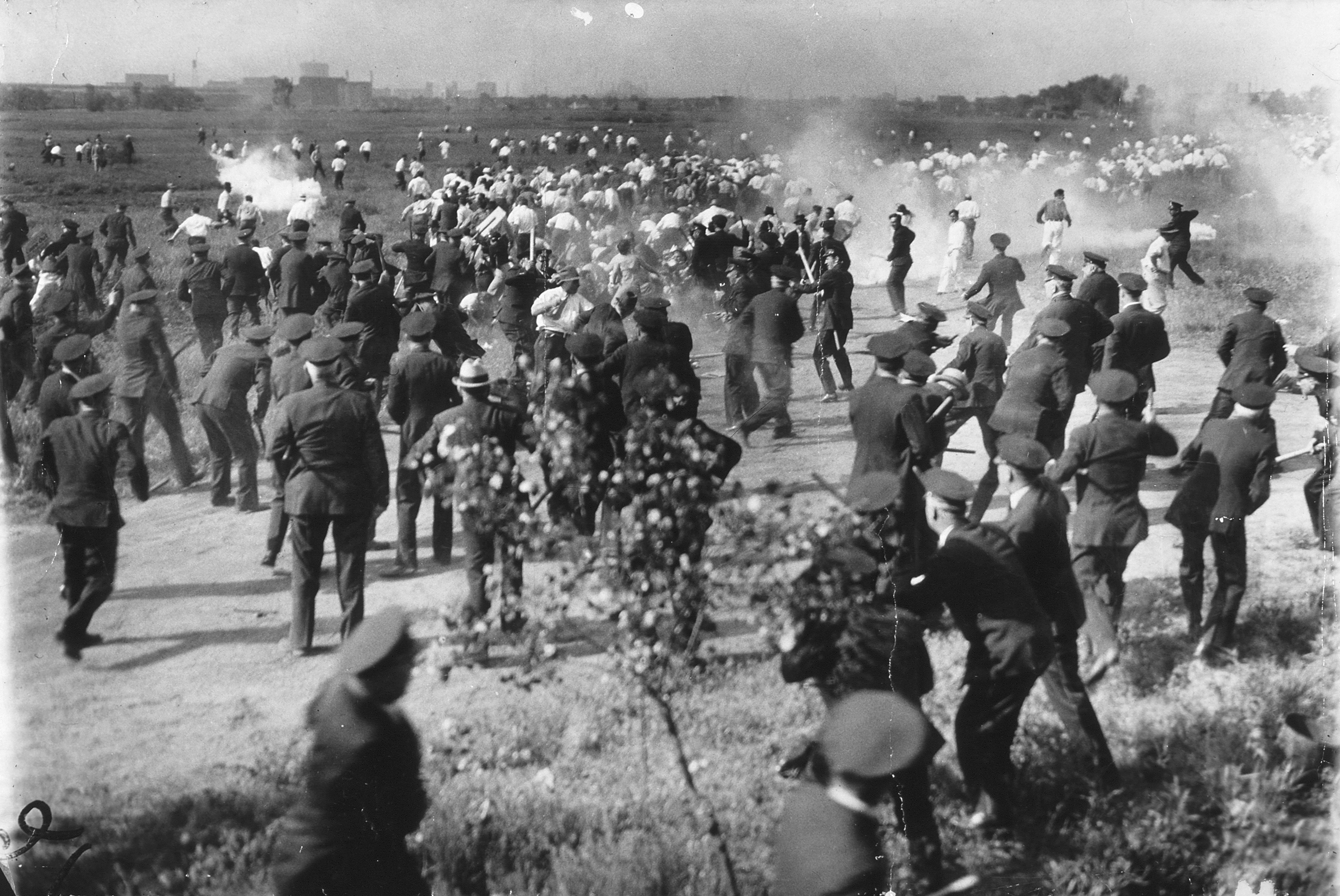
Chicago was seen as the perfect city for the development of criminal activity, it became a lawless and corrupt city and originated lots of well known gangsters. Chicago underwent a revolution, this was due to a few reasons, mainly because of the environment and setting of the City. The population of the City weakened the Government as it was constantly increasing, and new people were coming into the City, influencing others and forming gangs.Chicago attracted lots of immigrants and other people from different regions of the USA, as it was very commercialized and they had hopes of attaining jobs and to begin a better life in the laid back and vibrant City.
The crime rate was so high and the population was high, the police could not enforce the law in effective ways, and as the population grew, houses were being built in the suburbs and outskirts, which caused the crime rate to increase again. Children growing up in Chicago were often exposed to crime from a very young age, which caused the crime rate to keep increasing, as children were involved in crime and it was seen as a way of life for them. The working class were the main class in Chicago at this time, due to the nature of the work that was available in Chicago, and the increase of workers did not match the increase of police officers, so the law was seen as "totally inadequate"
Criminal activity was seen as a way of life and an easy way to make money, it was seen as a career to be a "hustler" For working class people who found it hard to earn money, criminal activity was an easy occupation to pay the bills and to live comfortably, for those who were doctors, lawyers and business men, money was not a problem as their jobs paid very well and kept them out of trouble.
What is Commedia dell’Arte?

All the characters in Commedia are all motivated by Money, Sex, Love, Food and Drink. They are always after something and are constantly thinking of ways to trick the other characters into getting what they want. They are all very credulous and cunning, always motivated by a force.
The main theme is Masters and Servants. It is all about status, the different status characters all have their own way of moving, talking and communicating. The masters are very bold and upright, whilst the Zanni are very low and lead with their noses, they move like birds, very fast but clumsy, like pigeons. And the masters move like eagles, very precise and carefully. You can tell the different statuses straightaway by the way they move.
The acting in Commedia is VERY dramatic, everything is always so over the top and is the complete opposite of Naturalistic acting. If they are sad, they are falling on the floor wanting to kill themselves and if they are happy they are jumping around screaming and shouting. It is all so extreme, and I can imagine it is very tiring for the actors!
I really enjoyed beginning Commedia, as it allows you to just let go and be ridiculous, but it looks really good, the more over the top you are the better. It bought everyone out of their comfort zones, but I did not feel embarrassed or self concsious whilst doing this as it is so playful and fun, you just let go completely and it looks really good. It is very physical as well, so beginning this has helped me a lot with acting with my body. It is a great start to Shakespeare, as he was very influenced by Commedia and Shakesperian acting is also very physical and dramatic.


Pantelone- He is an older man, who has a liking for women and money. He is quite creepy and is always wanting something
The Doctor- He is on the same status level as Pantelone, but although he is a doctor, he is actually very stupid. He is always talking about things he knows and methods and stories, but he understands nothing the other characters talk about and he never really holds a conversation with any of them.
Columbina- One of the only FEMALE parts, she never wears a mask and is a maid, but she is clever, witty and smart and all the males fancy her, she is always busy doing something but hears and knows everything. She is cunning and nosey
Brighella- He is a servant, but he is the higher status servant, he tells the other servant what to do and is very serious at all times. He is quite dark and mysterious
Harlequino- He is the other servant, he is of low status and loves to dance around. He is very silly and comical. He is always forgetting to do things and is very funny.
Zanni- This means " servant" in Italian. These people are the lowest of status and are below Harlequino and Brighella.

Tuesday, 10 March 2015

Assessment week research

For our assessment week research we have been given some questions we need to research and answer for the beginning of our new assignment.

  1. When was it written? Arturo Ui was written in 1941 by Brecht and was first performed in 1958.
  2. What was happening around this time? Around the time the play was written, Adolf Hitler was coming into power, and the story of Arturo Ui represents Hilter's rise, Hilter died in 1945, so this was written towards the end of Hilter's reign in power. World war 2 began in 1939, so this play is heavily influenced by the war and Hitler's rise.
  3. Who was in power? Hilter was in power from 1933, which was when he became Chancellor, and all his power follows from this.
    1. What do we know about the ruler? Adolf Hitler was born in  Austria in 1889. Hitler had a hard childhood and was neglected by his father. He wanted to pursue a career in Art, as he was a talented artist and painted watercolours to earn money. His father did not approve of his interest in art. Hitler also showed an interest in German nationalism, and rejected Austria's authority. When Hilter's father died in 1903, his mother let him drop out of school and move to Vienna, where he worked as a casual labourer and a watercolour painter. Hitler expressed a strong interest in Art and applied to the Academy of Fine Arts twice, and was rejected both times. He moved into a homeless shelter where he lived for several years, struggling to get by and continuing to sell his art work. Hitler applied to work in World War 1 serving for Germany and was accepted in 1914, even though he was Austrian. When the war ended in 1918, Hitler was distressed that Germany gave up so quickly, and I believe this is what led Hitler to strive to make a change and become Germany's dictator. After the war Hitler returned to Munich and worked as a German intelligence officer. Hitler regularly gave "Beer hall speeches" about how he wanted to change the German society and how he was against Jews, Marxists and Homosexuals.He gained many followers from this and in 1923 he announced to 3,000 people at a beer hall that the national revolution had begun. the "Beer Hall Putsch" riot included 20 deaths and was not successful. Putsch means a VIOLENT attempt to overthrow a government. This resulted in Hitler being arrested three days later and was sent to prison for a year, while he was in prison he began writing a book "Mein Kampf" (My struggle) in which he dictated all his ideas to become the German dictator and change German society into one race. In 1932, Hilter was out of prison and the German depression gave him a Political opportunity to come into power. In 1933 after success in Elections and gaining more power and followers, the Nazi party was confirmed the ONLY legal party in Germany. The Holocaust began in 1933, and from 1939 until 1945, Hitler believed interracial relationships made the poor hygiene increase, and he banned marriage between jewish germans and non jewish germans. Between 1939-45 Hitler and the Nazi party killed up to 14 million people, including 6 million jews, in concentration camps. He also sent 100,000 gay men to concentration camps as he was very anti gay, and he was also abstinent from meat, cigarettes and alcohol. After years of war, murders and policitial struggle, Hitler realised in 1945 that Germany would lose the war, just before he died Hitler married his long term girlfriend Eva Braun, in his small bunker and they both killed themselves the next day. His body was burned in a garden behind the Reich Chancellery and shortly after his death Germany surrendered to the Allies. Hitler left behind no children, and there has been speculation about his sexuality, as he was so against gays, and was never married nor had any children.  He only married his girlfriend as he knew he was going to kill himself as Germany were doomed in the war. He was very passionate about Germany and could not live to see them fall as a nation.
    2. What was happening in Chicago in the 1920-30's? " THE CORRUPT CITY" 
Chicago was seen as the perfect city for the development of criminal activity, it became a lawless and corrupt city and originated lots of well known gangsters. Chicago underwent a revolution, this was due to a few reasons, mainly because of the environment and setting of the City. The population of the City weakened the Government as it was constantly increasing, and new people were coming into the City, influencing others and forming gangs.Chicago attracted lots of immigrants and other people from different regions of the USA, as it was very commercialized and they had hopes of attaining jobs and to begin a better life in the laid back and vibrant City.
The crime rate was so high and the population was high, the police could not enforce the law in effective ways, and as the population grew, houses were being built in the suburbs and outskirts, which caused the crime rate to increase again. Children growing up in Chicago were often exposed to crime from a very young age, which caused the crime rate to keep increasing, as children were involved in crime and it was seen as a way of life for them. The working class were the main class in Chicago at this time, due to the nature of the work that was available in Chicago, and the increase of workers did not match the increase of police officers, so the law was seen as "totally inadequate"

Criminal activity was seen as a way of life and an easy way to make money, it was seen as a career to be a "hustler" For working class people who found it hard to earn money, criminal activity was an easy occupation to pay the bills and to live comfortably, for those who were doctors, lawyers and business men, money was not a problem as their jobs paid very well and kept them out of trouble.

"The problem of crime is the problem of youth. Every criminal career has its beginning"


Source of research